From baseline to behaviour
From baseline to behaviour – TotalEnergies and the Deepsea Mira from Namibia to the Congo
August 7, 2026


Deepsea Mira’s multi-well programme for TotalEnergies covered Namibia and Congo with long transits between basins. Stepwise connected live rig data with disciplined analysis to create a repeatable operational and fuel baseline across five wells and two transits, with emissions measured throughout the campaign. The team showed how clarity on phase baselines, support-operations impact and improvement initiatives can turn varied conditions into measurable improvement across a long campaign.

Key figures
Establishing a unified baseline across basins.
Across 564.5 days of operations, Stepwise supported TotalEnergies and Odfjell Drilling in capturing operational, fuel and emissions data from five wells and two transits between Namibia and Congo. Total campaign emissions reached 98,031 CO2te, just 0.6% below plan, despite a longer-than-expected schedule. Tamboti-1X emerged as the benchmark, achieving a 31.8% reduction vs plan and 74.4% lower emissions during well testing. Average drilling intensity improved from 4.94 to 2.36 CO2te per metre, while Stepwise analysis revealed that vessel and logistics activities contributed 23% of total emissions, a clear focus area for further reduction. Together, these results demonstrate how a unified baseline enables measurable efficiency gains, even across multi-basin campaigns.
Total CO2 emitted vs plan
−0.6%
Standout well: Tamboti-1X CO2te
−31.8% vs plan
CO2te/m drilling intensity from Venus-2A to Marula-1X
4.94 → 2.36
Campaign duration
564.5 days
Emission distribution: Rig
74.8%
Emission distribution: Vessels
20.3%
Emission distribution: Helicopters
3.4%
Emission distribution: Materials
1.6%
Total savings potential *
≈$5.0M
Method note: At TotalEnergies’ request, NPT and WOW were out of scope for this campaign’s dataset. * Combined total savings potential annualised for both implemented and recommended Emission Reduction Initatives (ERIs)
How savings were made
Turning insight into disciplined action.
Stepwise established well-phase fuel baselines, integrated K-IMS power data, and produced end-of-well and campaign roll-ups. Insight focused on drilling intensity trends, phase outliers, and the share from support operations. Tamboti-1X demonstrated the value of disciplined planning and execution at phase level, while the campaign view highlighted logistics as a material lever for further gains.
Implemented and recommended ERIs based on assumptions. *
Total annualised savings potential: ≈ $5.0M
Implemented during campaign (from Niamou onward).
Total implemented annualised savings: ≈ $0.4M.
Learnings and transferable insights for future campaigns.
- Start with One-Team and one baseline: Establish shared definitions and reporting routines early to build clarity and consistency from mobilisation.
- Keep a single operational framework: Using one operational and fuel baseline, with emissions measured consistently across locations, supports fair comparison and continuous improvement.
- Track all contributors to performance: Include vessel and logistics data in daily reviews to maintain a full picture of operational efficiency.
- Verify ERIs through structured testing: Apply controlled trials to confirm the impact of smaller energy-reduction measures before wider adoption.
- Plan for balanced engine loading: Stable load management improves efficiency and reduces variance across operating phases.
- Record context, not just numbers: Documenting the reasons behind performance changes makes learning transferable and repeatable.
- Standardise phase comparisons: Consistent fuel and CO2 boundaries ensure data remains comparable across wells and time periods.
- Extend crew engagement on energy use: Crew-led observation and action programmes strengthen ownership of daily efficiency.
- Use each campaign to inform the next: Carry forward baselines and learnings to accelerate improvement in future operations and for continious improvement.
All insights exclude NPT and WOW to maintain focus on controllable efficiency improvements. Marine Gas Oil (MGO): $750 per m³
The goal
Collaboration made measurable.
The Mira campaign set out to build a single, trusted baseline for fuel use and CO2 across wells, phases, and support operations. Stepwise aligned operator, drilling, and marine data in one performance framework, turning daily activity into clear, comparable results. The outcome was a consistent foundation for tracking progress, identifying improvement opportunities, and shaping a repeatable model for the next campaign.
Deepsea Mira: Image courtesy of Odfjell Drilling
The appoach
A structured rhythm for continuous improvement.
Stepwise aligned data sources, normalised rig fuel baselines, and delivered well-on-well insights using the Stepwise loop: What → So What → Now What. Daily reporting and end-of-well summaries created a common evidence base for decisions, with clear next-step ERIs for technical and behavioural levers.
Campaign overview (when video is available)
Testimonials
The key advantage of Stepwise is its ability to understand the rig's power allocation and find ways to reduce its power consumption and to help us achieve our end objectives to reduce power consumption and Green House Gases.

This campaign showed significant untapped potential for emissions and efficiency gains. With data collected and a robust baseline in place, we can simulate ERIs and support earlier planning on future campaigns.
Thank you!
Shared effort, measurable results.
Stepwise thanks TotalEnergies, Odfjell Drilling and Northern Ocean for their collaboration across basins, phases, and long transits. The campaign created a durable baseline and a practical ERI roadmap for future wells.
Would you like to to know more about this case?
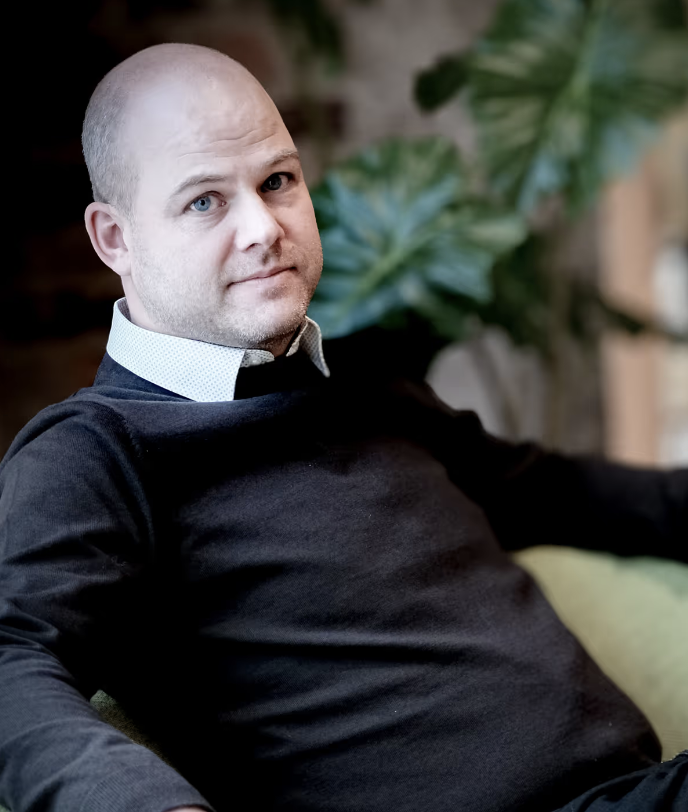
Reach out to Morten Skeie, key account manager for this project - he would be more than happy to answer questions or discuss the case in more detail.

